Case · Searadar.ai
Set up daily financial control at Searadar.ai and built dashboards to track cash


About the company
Searadar.ai is a concierge service for yacht bookings. When we started working together, turnover was several hundred thousand euros a month and the team was 15 people.
Accounting ran on spreadsheets, so managers were constantly deciding after the fact, with no read on current working capital or on the marketing plan.
In a few weeks we put in a single financial system: a daily feed into Xero, automatic synchronisation from the CRM and the banks, and a cash forecast six weeks ahead.

What made it hard
- Mixed money. Client deposits, own revenue, marketing and admin costs all lived on one account. The balance looked healthy right up until a payment day
- A scattered stack. Two European banks and Stripe, accounting in Excel and the CRM. The data would not join up
- Accounting after the fact. The finance manager spent 3–5 days a month assembling spreadsheets by hand, and the report reached the founder late and stale
- Broken forecasts. Refunds and cancellations ate into revenue after the optimistic updates had gone out, so marketing and payment plans drifted away from reality
Implementation
The goal: see the net balance of Client Funds versus Own Funds every day, along with obligations to the fleets and a six-week cash horizon, so the red zones show up in advance
-
Stage 1
Mapping the flows
- Mapped money in and out: Stripe, acquiring banks, the multi-currency account, CRM deals
- Found the points where flows mixed and the transactions with no link to an order
-
Stage 2
Moving onto Xero
We rolled out Xero:
- set up the chart of accounts and separate balance sheet lines for Client Funds and Own Funds by currency
- connected the bank and Stripe APIs and wrote the auto-categorisation rules
- rebuilt the reporting for prior periods, cleaning out the mixed transactions
-
Stage 3
ETL and a data layer
- Built the pipeline: Xero + CRM → Appflow → BigQuery → Looker
- A daily Cash View: client and company balances, receivables and payables by fleet, penalty deadlines, forecast
- The marketing funnel: spend → leads → bookings → GMV → commission
- A pre-sales map: geography, yacht types, availability windows
-
Stage 4
Budget and process
- Assembled a P&L budget with quarterly detail: leads, conversion, GMV, commission, variable costs, marketing
- Introduced two control rhythms: Monday for operational plan versus actual and a forecast update, Friday for a founders’ sync on risks and decisions
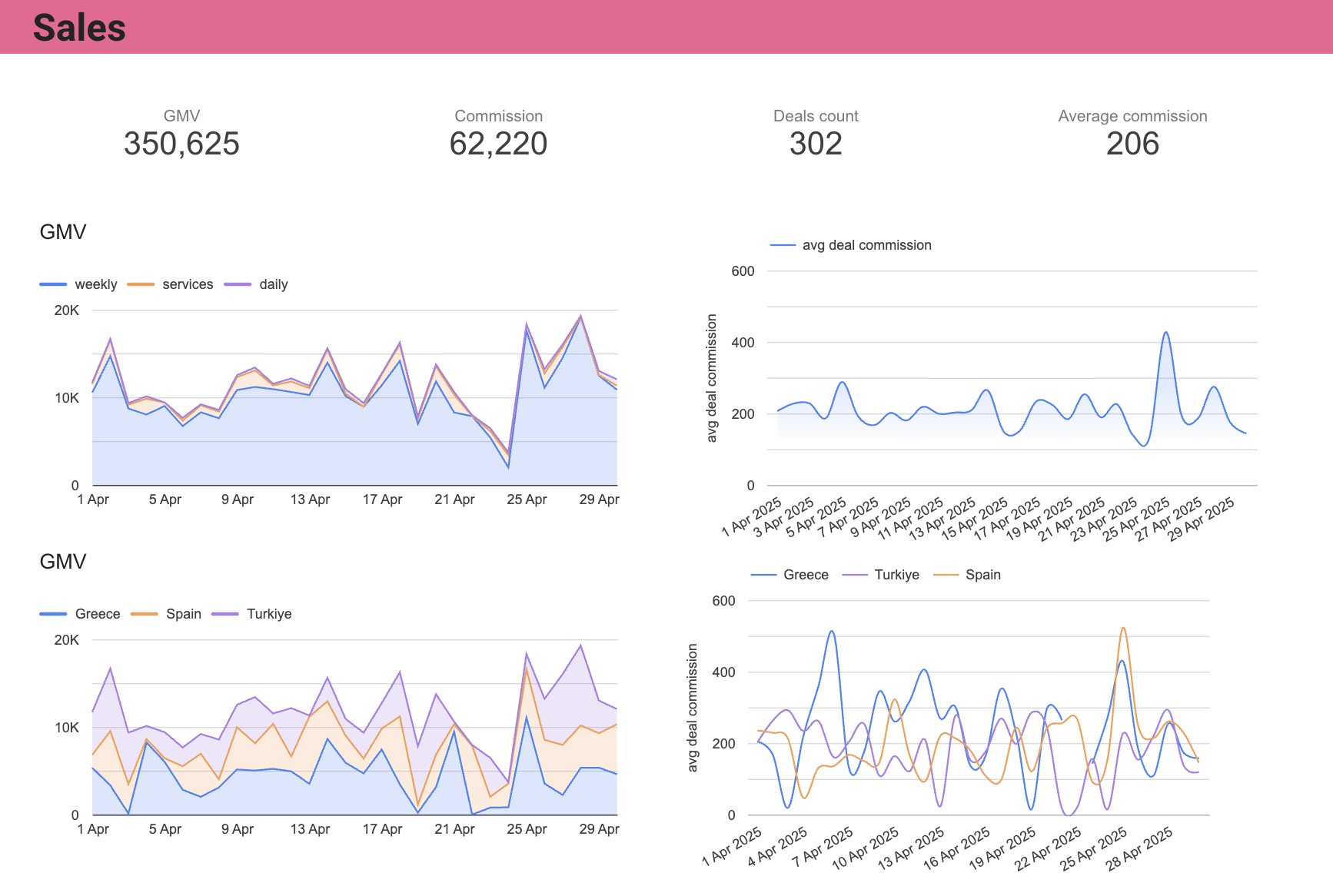
We could now see cash dips caused by underperforming marketing 3–4 weeks before they happened, which is the average time to close 70% of leads
Results
- Cash gaps became visible 3–4 months before they happened. The company had time to close them: raising loans, increasing the marketing budget for new sales, pushing sales with discounts and so on
- The founder’s time came back. Minus 8 hours of routine a week. Instead of assembling reports, the founder develops the luxury segment and partnerships with large charter companies
- Reporting is ready within 3 hours of a transaction or a new deal, so decisions can be made on the spot and marketing or sales pushed accordingly
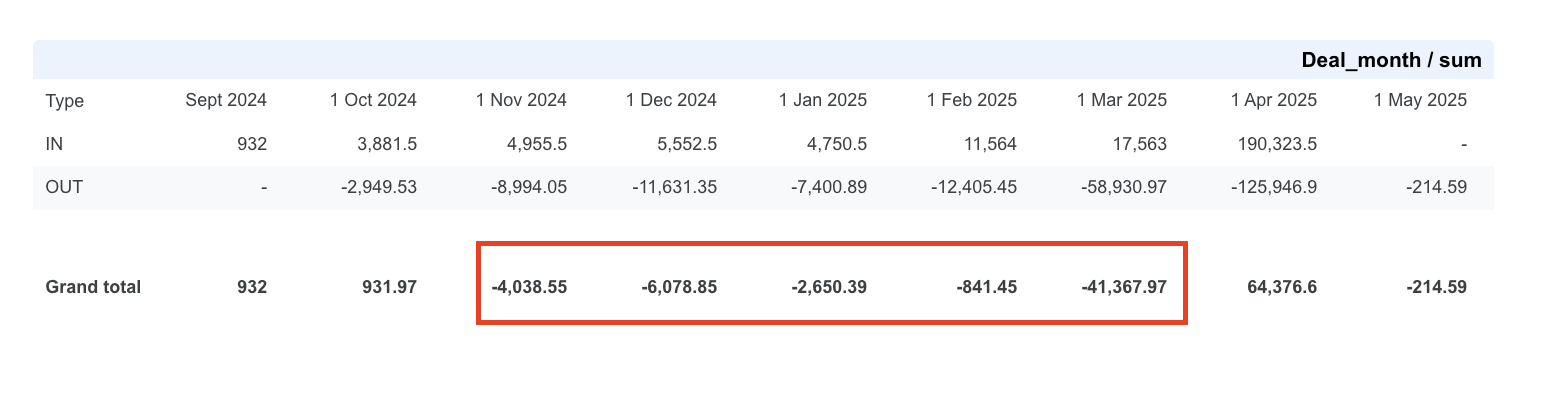
We could see cash gaps on payments to charter companies several months before they happened
(screenshot from August 2024)
Interested?
Let’s get on a call!
On a call we go through the goals your company has right now and work out where we can help you grow
Let’s meet 30 minutes